
Has anyone tried anything with the Rot13 Cipher? I only just found out about it, so I’m not sure if anyone’s tried anything with it.
Since Rot13 (or RotN) only works with pure text that consists of letters of the alphabet, it can’t be applied to the hex code directly. But we can do something similar, like nibble-wise rot [1-15] (single digit hex rot) or bytewise rot [1-255] (double digit hex rot).
Quite a while back I tried bytewise ROT [1-255] (all 255 of them). I visually inspected the hexdumps of all the resulting files, and also ran the ‘file’ command in Linux (a program that identifies file signatures) on them.
I can’t remember if I tried nibble-wise rotations. But I’ve tried bit rotations.
I know others have tried similar things as well.
But the problem with ROT and bit rotations is that they don’t change the entropy. A message in ASCII will have much lower entropy than the HALOS code. But we can’t rule out the possibility that a simple cipher or encoding has been used to mask clues about what the code is, or which tool might have been used for encrypting/encoding the message.
Another possibility could be that we need to do ROT on the password, and not the code itself. For example, it’s conceivable that BENALOHPAILLIER might be quickly brute forced by a dictionary type brute force attack. But brute forcing SVERCFYGRZCCZVI would probably take longer.
But an interesting fact is that Storm may have used ROT-13 on the forums before. In 2014, he wrote a post announcing the release of the Official Source Filmmaker Content Pack DLC for Black Mesa. The post was signed:
If you do ROT-13 on ULCR, ULCR becomes HYPE. Coincidence?
Well, seeing the Octodog my mind immediately went to octal encryption, and further enforced by the observation of the “OCT” in the TOR Page. However, I would also note that a pizza is usually divided into 8 slices, right? Maybe we need to slice this Halos code up into 8 pieces and solve them one by one somehow.
Well, the 752 hex digits can be divided into 94 8-character hex “words”. Which is pretty much how bytes are divided up. AND how the HALOS code is displayed in this page.
Converting the Hex code into Octal is very easy to do. Somebody add it to the wiki page once you’ve converted it.
[table]
[tr]
[td][align=center]Hex Digits[/align][/td]
[td][align=center]Bits[/align][/td]
[td][align=center]Bytes[/align][/td]
[td][align=center]Name[/align][/td]
[/tr]
[tr]
[td][align=right]1[/align][/td]
[td][align=right]4[/align][/td]
[td][align=right]1/2[/align][/td]
[td]nibble, half-octet[/td]
[/tr]
[tr]
[td][align=right]2[/align][/td]
[td][align=right]8[/align][/td]
[td][align=right]1[/align][/td]
[td]byte, octet[/td]
[/tr]
[tr]
[td][align=right]4[/align][/td]
[td][align=right]16[/align][/td]
[td][align=right]2[/align][/td]
[td]word[/td]
[/tr]
[tr]
[td][align=right]8[/align][/td]
[td][align=right]32[/align][/td]
[td][align=right]4[/align][/td]
[td]doubleword, dword[/td]
[/tr]
[tr]
[td][align=right]16[/align][/td]
[td][align=right]64[/align][/td]
[td][align=right]8[/align][/td]
[td]quadword, qword[/td]
[/tr]
[tr]
[td][align=right]32[/align][/td]
[td][align=right]128[/align][/td]
[td][align=right]16[/align][/td]
[td]octaword, double quadword[/td]
[/tr]
[/table]
See also: Integer
Actually, it is not that simple. To convert the hex to octal (from base-16 to base-8), we must treat the whole hex string as one humongous number. But how do we know the data is complete? For all we know, the transmission may have been aborted before all the data was transmitted, leaving us with incomplete data (remember “[ABORTIVE.]” ?). Also, converting from one base to another like this isn’t practical with large amounts of data. In communications, data is usually processed in chunks, or as a continuous stream of data.
For example, look at how base64 encoding works: Three bytes, 24 bits, are read at a time and split into four 6-bit numbers, each of which is then mapped to a symbol in a 64-character alphabet.
Yes, I’m sorry. A Dword was what I meant.
Wrong. Given that the HALOS code is ALREADY IN HEX/BYTE FORMAT, all you do is take two hex digits at a time, then convert that to octal. And “viola”, you get the whole HALOS code in Octal.
Only thing is, what are we supposed to do with it AFTER that?
Sorry, I didn’t mean to correct you on your semantics. I just thought that the table might be useful.
Yes, but that will just give you an array of octal numbers between 0o0 and 0o377. If you string them together, the result will not be the same number as the number represented by the hex code (if you look at it as one large number). For example, 0xb3 = 0o263 and 0x2b = 0o53, but 0xb32b = 0o131453.
I am not saying that there is a right and a wrong way of doing the conversion, because anything is possible in a puzzle. I am just saying that there is a difference.
Curiosity question.
Why does the website https://terminal.blackmesasource.com/ have D-O-R-N in bold?
If you google it the results show DORN to be short for the DORNIER, an aircraft that was used for the testing of quantum cryptography.
Coincidence? Or is there another meaning for D-O-R-N that might lead us to something useful?
well if that isn’t a carrot…
It’s “Dr Horn”, you missed R in stRange, and H in Have (it’s capital, even though it’s not beginning of sentence).
What @CPU meant is: Of the out-of-place capital letters that spell out D-R-H-O-R-N, only the letters D-O-R-N are also in bold.
[code]It has come to my attention that strange messages have been appearing throughout Black Mesa, and have been causing somewhat of a conunDrum concerning what has become known as “The Pizza Code Mystery”.
I have long suspected that there was something stRange going on during the development of this facility. The unexplained disappearances, misappropriation of funds regarding cheesy oven-baked bread products and an ominous feeling that something is constantly watching this all from the shadows, Have added up to create something that needs solving, and sOlving fast.
As a result, I am offering a small reward to the first peRson that can solve this mystery and provide me with the answers I need. Together, I’m sure you caN crack this.[/code]We saw something similar on the Tempus page, where two italicized letters were not in bold, unlike the rest of the italicized letters.
Aircraft, you say?
No, I don’t find that coincidental at all.
It’s still another reference to aircraft.
There’s the D-O-R-N ref…
…the Harrier on Storm’s desk…
…the Harrier strike on the base in ST…
…the many airfield pictures throughout the game, including in Storm’s shack…
…there’s the jet.ogg thing…
…Niobium is used in jets…
We have been assuming that HALOS is an AI, possibly mobile in some way.
What if HALOS is an airborne AI?
Adding to the whole 8/OCT thing. Binary uses 8 digits in either 0 or 1’s when its written like the halos code is written in HEX.
Also kinda funny but that’s how 8-Bit systems count up to 255.
That Manta Ray is really interesting. I’ve said before how I’ve suspected HALOS of being a type of weapon(High Altitude Laser Optronics System or something to that type maybe), and that wiki states specifically how it shoots “orange lasers” from it. Maybe Horn is working with the Combine through G-Man to construct possible technology for what becomes Half Life 2 Synths? Far fetched, I know, but doesn’t hurt to throw it out there.
sooooo I came across this a while ago, didn’t think anything of it, until I re read some stuff today.? sorry, the letter to the right of O is intermittent, waiting for rma keyboard.
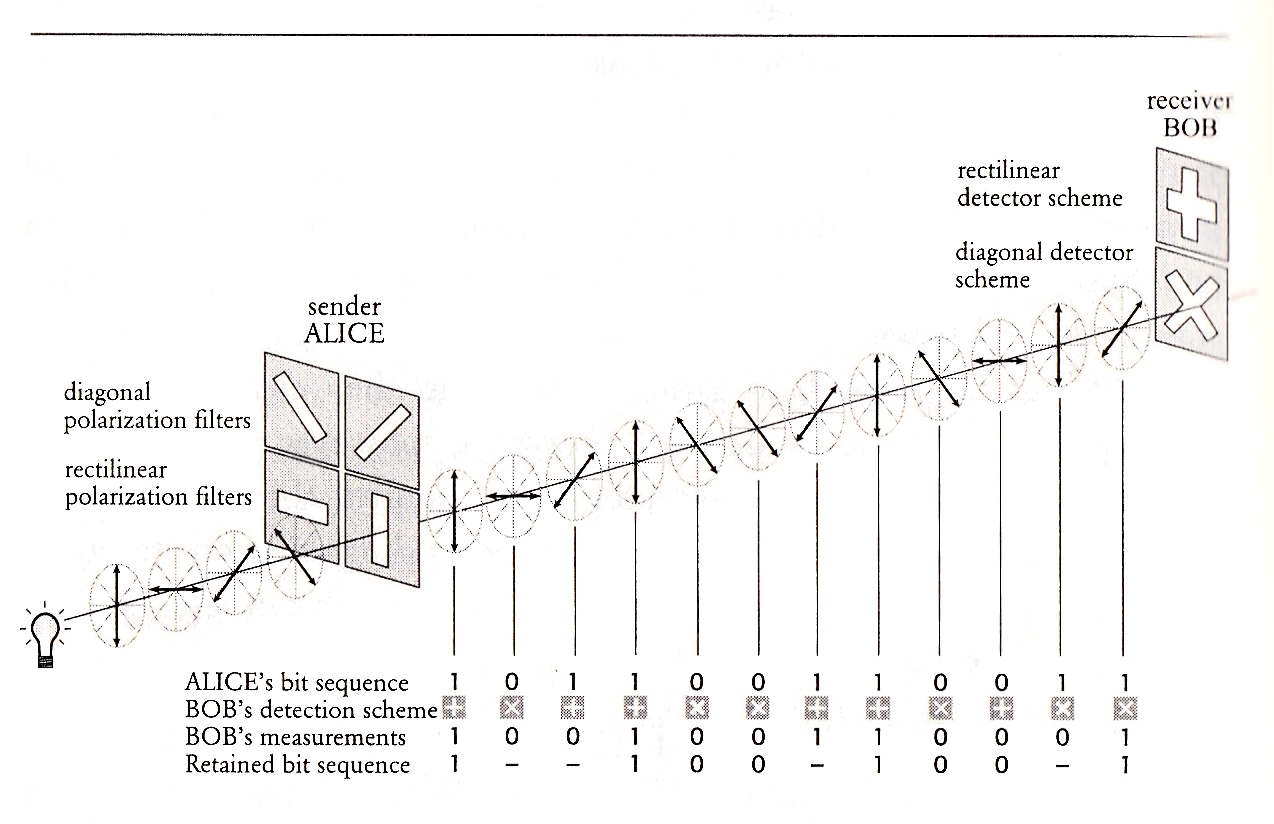
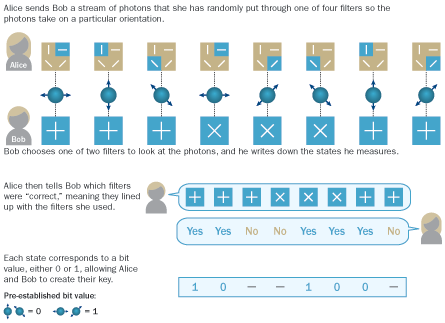
taken from wikiedia.org ALICE… alice knows how deep it goes…
Random rotations of the polarization by both parties (usually called Alice and Bob) have been proposed in Kak’s three-stage quantum cryptography protocol.[sup][3][/sup] In principle, this method can be used for continuous, unbreakable encryption of data if single photons are used.[sup][4][/sup]
also here are some images…
also, “Polynomial-Time Algorithms for Prime Factorization and Discrete Logarithms on a Quantum Computer”
Shor’s algorithm, and
Pseudo-polynomial time[/size]
From Wikipedia, the free encyclopedia Jump to: navigation, search
In computational complexity theory, a numeric algorithm runs in pseudo-polynomial time if its running time is polynomial in the numeric value of the input, but is exponential in the length of the input – the number of bits required to represent it.
An NP-complete problem with known pseudo-polynomial time algorithms is called weakly NP-complete. An NP-complete problem is called strongly NP-complete if it is proven that it cannot be solved by a pseudo-polynomial time algorithm unless P=NP. The strong/weak kinds of NP-hardness are defined analogously.
and just asking, was anything ever made of this?
FURTHER ANALYSIS…
TRANSMISSION SOURCE TRIANGULATION NOT POSSIBLE.<|>
95Nb 41 54 94.9068358(21) 34.991(6) d β- 95Mo 9/2+
95mNb 235.690(20) keV 3.61(3) d IT (94.4%) 95Nb 1/2-
β- (5.6%) 95Mo
96Nb 41 55 95.908101(4) 23.35(5) h β- 96Mo 6+
97Nb 41 56 96.9080986(27) 72.1(7) min β- 97Mo 9/2+
97mNb 743.35(3) keV 52.7(18) s IT 97Nb 1/2-
98Nb 41 57 97.910328(6) 2.86(6) s β- 98Mo 1+
98mNb 84(4) keV 51.3(4) min β- (99.9%) 98Mo (5+)
IT (.1%) 98Nb
99Nb 41 58 98.911618(14) 15.0(2) s β- 99Mo 9/2+
99mNb 365.29(14) keV 2.6(2) min β- (96.2%) 99Mo 1/2-
IT (3.8%) 99Nb
100Nb 41 59 99.914182(28) 1.5(2) s β- 100Mo 1+
100mNb 470(40) keV 2.99(11) s β- 100Mo (4+,5+)
101Nb 41 60 100.915252(20) 7.1(3) s β- 101Mo (5/2#)+
102Nb 41 61 101.91804(4) 1.3(2) s β- 102Mo 1+
102mNb 130(50) keV 4.3(4) s β- 102Mo high
103Nb 41 62 102.91914(7) 1.5(2) s β- 103Mo (5/2+)
104Nb 41 63 103.92246(11) 4.9(3) s β- (99.94%) 104Mo (1+)
and there is this…
Quantum algorithm[/size]
From Wikipedia, the free encyclopedia Jump to: navigation, search
In quantum computing, a quantum algorithm is an algorithm which runs on a realistic model of quantum computation, the most commonly used model being the quantum circuit model of computation.[sup][1][/sup][sup][2][/sup] A classical (or non-quantum) algorithm is a finite sequence of instructions, or a step-by-step procedure for solving a problem, where each step or instruction can be performed on a classical computer. Similarly, a quantum algorithm is a step-by-step procedure, where each of the steps can be performed on a quantum computer. Although all classical algorithms can also be performed on a quantum computer,[sup][3][/sup] the term quantum algorithm is usually used for those algorithms which seem inherently quantum, or use some essential feature of quantum computation such as quantum superposition or quantum entanglement.
Problems which are undecidable using classical computers remain undecidable using quantum computers. What makes quantum algorithms interesting is that they might be able to solve some problems faster than classical algorithms.
The most well known algorithms are Shor’s algorithm for factoring, and Grover’s algorithm for searching an unstructured database or an unordered list. Shor’s algorithms runs exponentially faster than the best known classical algorithm for factoring, the general number field sieve. Grover’s algorithm runs quadratically faster than the best possible classical algorithm for the same task.
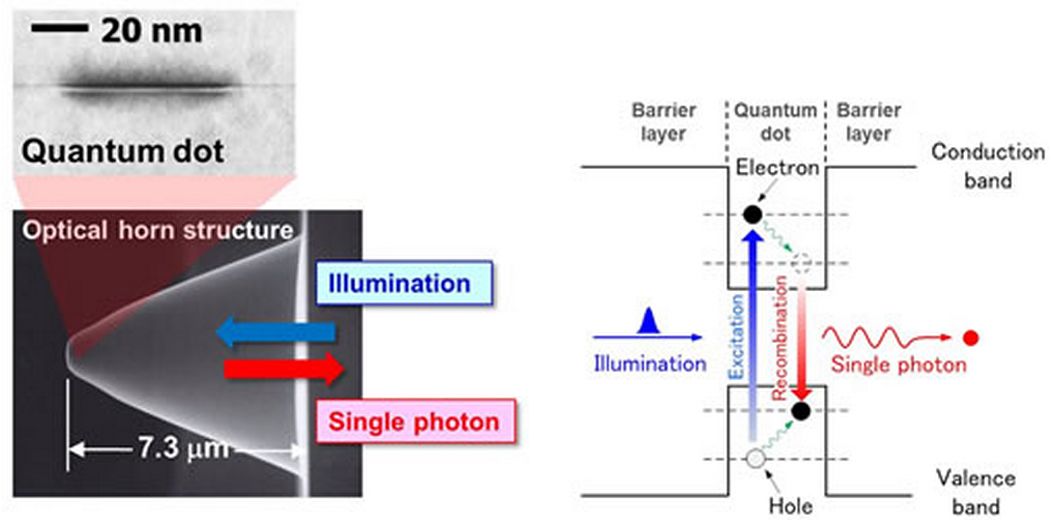
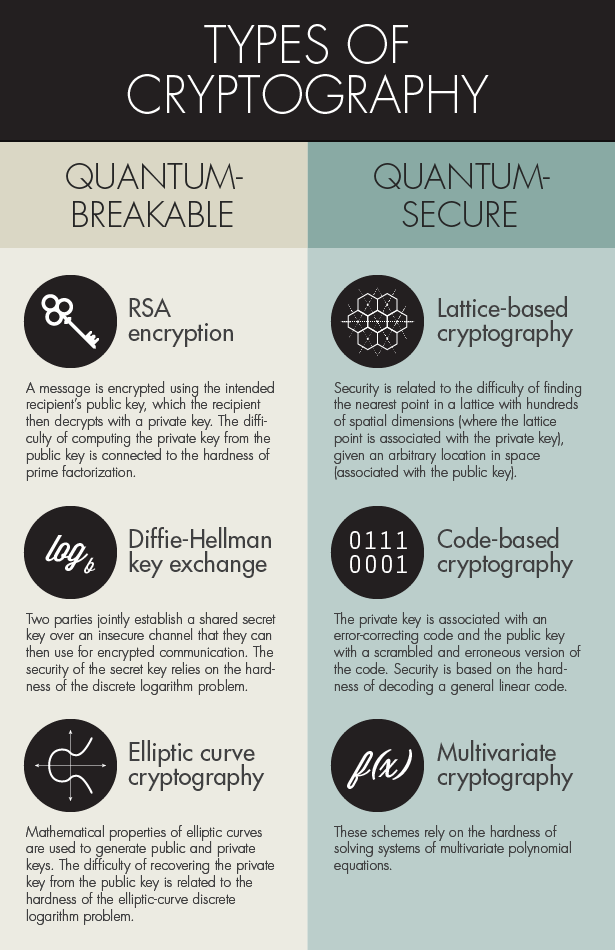
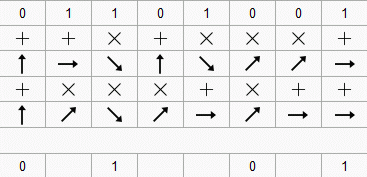
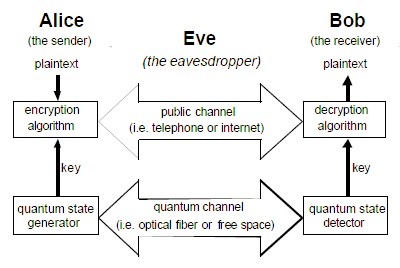

was anything done with the data?